“WHEN THE TRUTH ARRIVES”
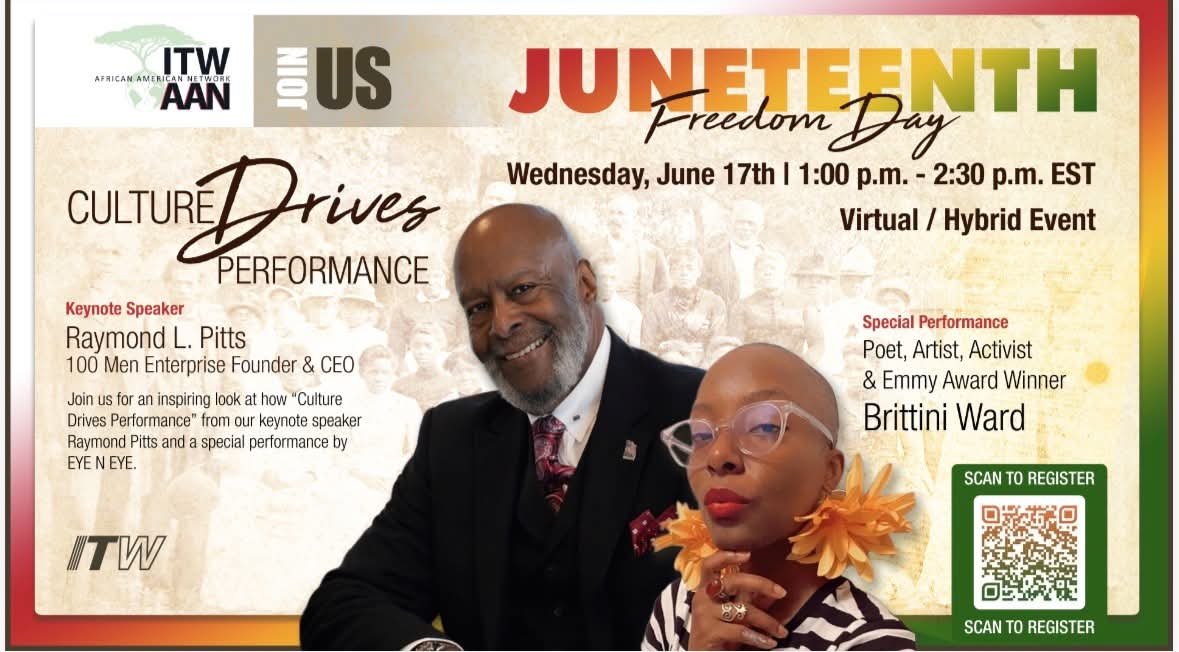
Image of the Flyer for ITW Juneteenth Celebration
When the Truth Arrives - A Narrative Reflection on Juneteenth, Labor, and Belonging at ITW Automotive
Context Summary
Intended Audience: Employees, leadership, members of the African American Network, and community participants attending ITW Automotive's Juneteenth celebration in Troy, Michigan.
Purpose: To observe the event in real time and compose a closing reflection connecting Juneteenth's history to contemporary workplace culture, belonging, and collective responsibility.
My Role: Commissioned writer and performer. I attended the event, listened to speakers and participants throughout the day, identified recurring themes, and composed an original piece that was performed live as the event's closing reflection.
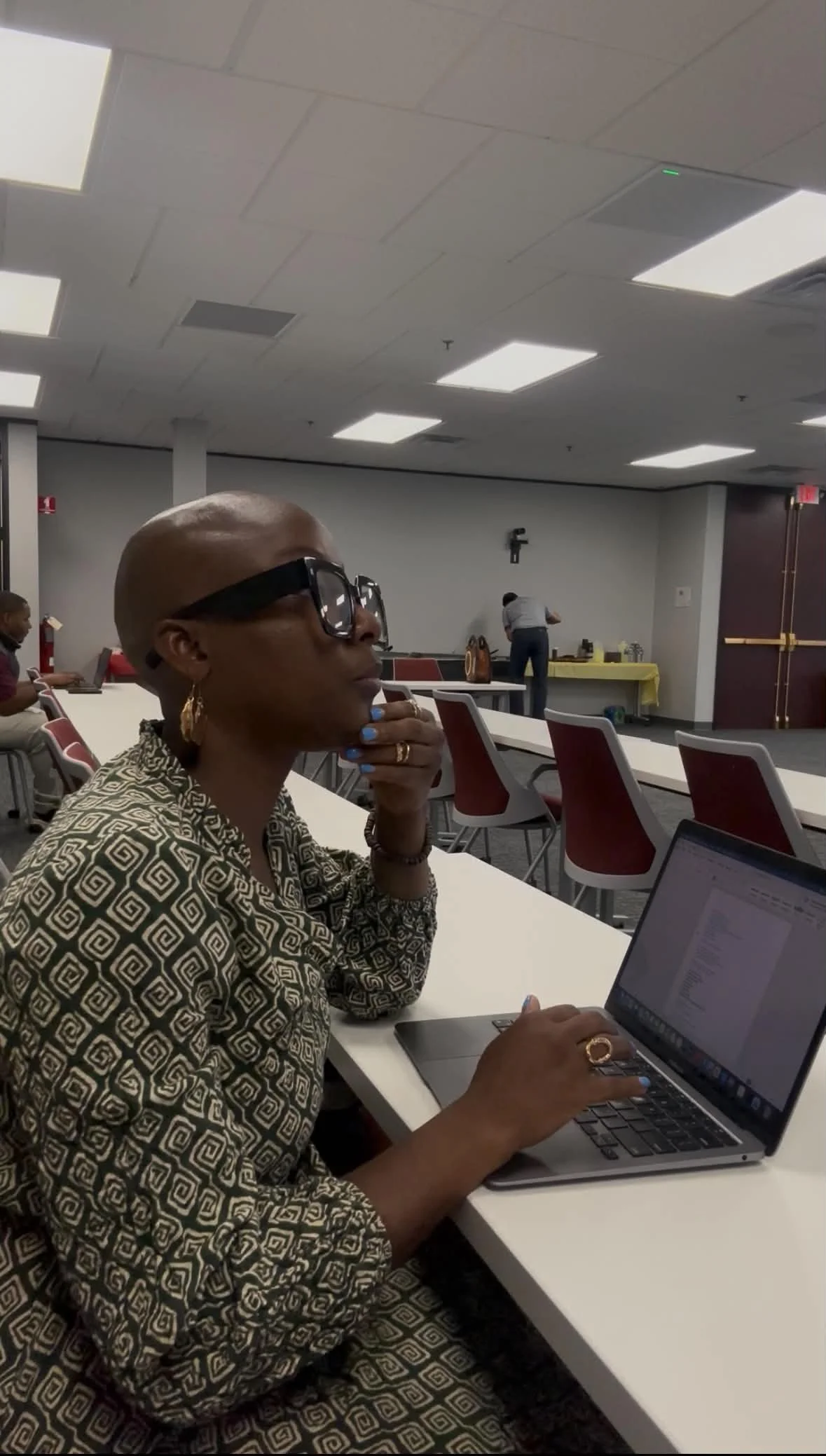
Photo capture of Brittini Ward listening and crafting her narrative reflection during the ITW Juneteenth event.
Collaborators: ITW Automotive, the African American Network Employee Resource Group, event speakers, performers, organizers, and participants whose contributions informed the narrative.
Impact: The piece synthesized multiple perspectives into a shared narrative connecting personal experience, labor history, organizational culture, and the continuing significance of Juneteenth.
I came to speak about Juneteenth.
Driving from Detroit to Troy, from Livernois Avenue to Kits Boulevard, I passed a building I had seen many times but never entered. That morning, I signed in, exchanged smiles, and walked through the doors of ITW Automotive for a Juneteenth celebration hosted in partnership with the company's African American Network. As I settled into the space, I found myself wondering how different the experience might feel if I had arrived on an ordinary day. Holidays have a way of opening doors for culture to be seen, acknowledged, and welcomed in places where it may otherwise go unnoticed.
The room slowly filled. Coffee brewed in the background. Virtual attendees appeared on screens. Employees greeted one another with handshakes and laughter. Young people took their seats. Plates grew heavy with food. The atmosphere felt intentional. Every detail seemed designed to communicate a simple message: you belong here.
As I listened throughout the day, I found myself imagining Juneteenth not only as a holiday but as a practice.
What if Juneteenth was something we did every day?
What if it looked like learning someone's name and remembering it? Asking why they are here. Making sure they know where they belong. Helping them find their destination before they must ask for directions. Preparing for emergencies that may never happen because care itself is a form of preparedness.
The first strike of the drum shifted the room.
Its rhythm grounded me and reminded me that Black culture has always carried memory through sound. My heartbeat seemed to move in sync with the drum, connecting me to something older than myself. In that moment, I was reminded that Juneteenth is not confined to a single place or date. History follows us. It enters boardrooms, break rooms, factory floors, and communities still wrestling with what freedom means in practice.
One speaker reflected on the purpose of the African American Network, describing it not simply as a professional resource group but as a commitment to community. A reminder that people are not meant to journey alone.
That idea lingered with me.
There is a direct line connecting Juneteenth to the automotive industry. It is a road traveled by generations of Black families carrying little more than suitcases, determination, and hope. It is the road of the Great Migration. The road from cotton fields to factory floors. The road from surviving freedom to building a future within it.
When ITW was founded in 1912, there were people still alive who remembered slavery. There were people who remembered hearing that freedom had finally arrived, not as a chapter in a history book but as breaking news. Relief. Possibility. A promise still waiting to be fulfilled.
Juneteenth reminds us that freedom is not only a declaration. It is the ongoing assembly of a future.
Bolt by Bolt.
Generation by generation.
Decision by decision.
In manufacturing, there are parts beneath the hood we rarely notice until they are missing. History works much the same way. There are people whose labor helped build this country, whose fingerprints can be found on nearly every American institution, yet whose names are seldom spoken. Hands that picked. Hands that lifted. Hands that welded. Hands that organized.
Juneteenth asks us to sit with an uncomfortable reality: what does it mean for freedom to exist in law but not in everyday life? What does it mean for a truth to arrive years late?
Perhaps that is why the holiday continues to resonate.
It is not simply a celebration of freedom gained. It is a reminder of freedom delayed.
And it continues to ask questions.
How free do we really feel?
How much of ourselves are we allowed to bring into the spaces we occupy?
What truths are we still waiting to hear?
What possibilities remain unopened because someone has not yet been told they belong?
By the end of the event, it became clear that Juneteenth belonged in Troy—not because Troy was Galveston and not because this building carried the history of a plantation. It belonged here because Juneteenth belongs wherever people gather to reckon with history and imagine a better future.
Freedom delayed is freedom denied.
The question each generation must answer is what we will do once the truth arrives.
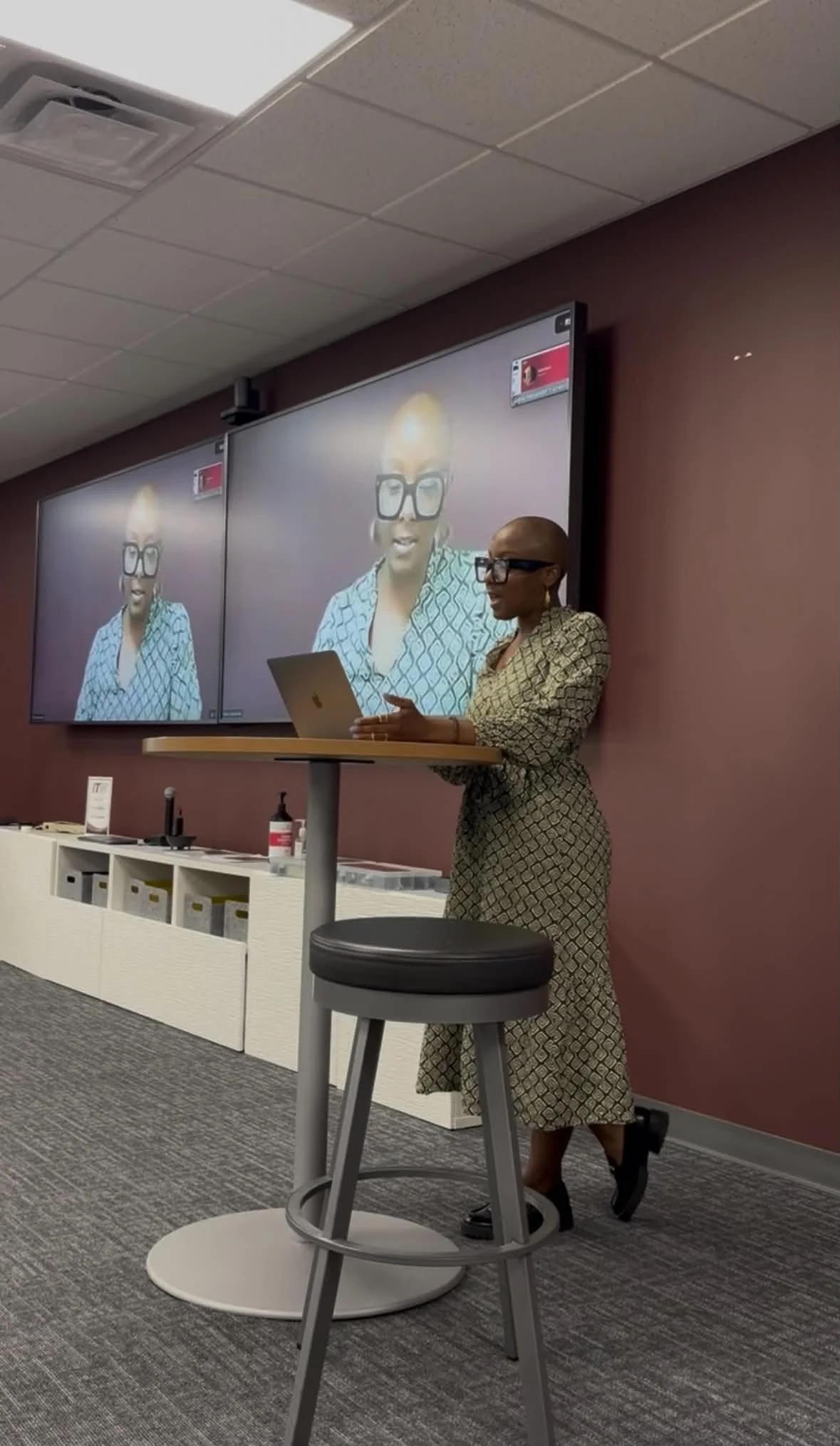
Photo capture of Brittini Ward sharing her narrative reflection with 250+ ITW employees.
